
If you’ve searched for the best piononos de Santa Fe near me, you’re looking for one of Spain’s most beloved little desserts — and for good reason. This small rolled pastry, soaked in syrup and topped with toasted cream, has a genuine history and a very specific origin story that most online guides gloss over. In this article, we’ll cover where piononos actually come from, what separates an authentic one from a mass-produced copy, and practical tips for finding a great bakery near you.
What Is a Pionono, Exactly?
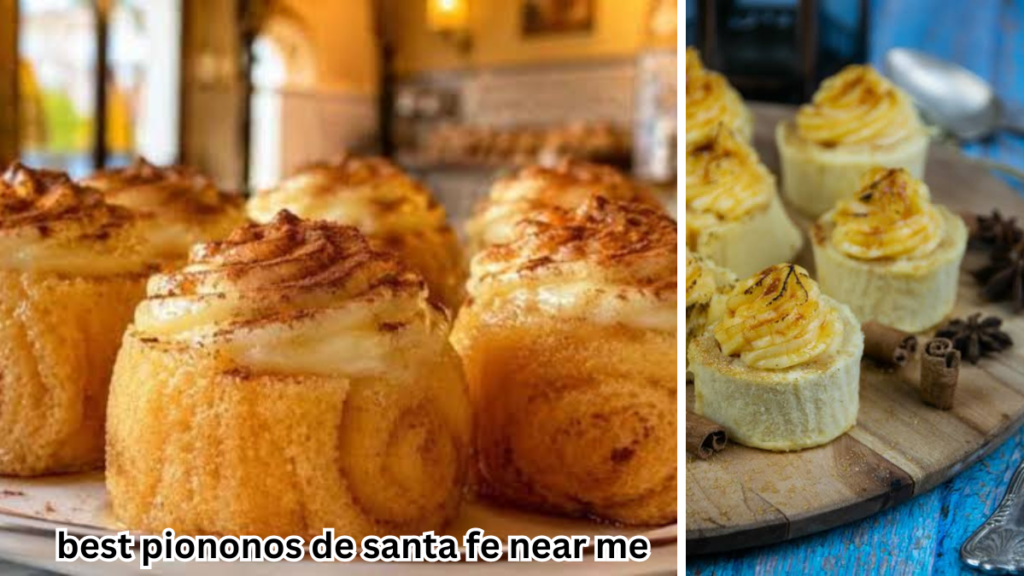
A pionono is a small cylindrical pastry made from a thin sheet of sponge cake, rolled tightly, soaked in sweet syrup, and finished with a layer of toasted (often lightly torched) pastry cream. The result is a bite-sized dessert that’s moist, creamy, and mildly caramelized on top — usually eaten in one or two bites alongside coffee.
It’s easy to confuse piononos with similar rolled desserts from other countries. Argentina and Uruguay have their own version of “pionono” (a Swiss-roll-style sponge cake, often filled with dulce de leche or savory fillings), and Puerto Rico has an entirely different dish also called “pionono,” made from fried sweet plantains. These are worth knowing about if you’re doing broader research, but the pastry most people mean when they search “piononos de Santa Fe” is the original Spanish version.
The Real Origin: Santa Fe, Granada
The dessert takes its name from Santa Fe, a small town near Granada in Andalusia, Spain — not Santa Fe, New Mexico, or Santa Fe in Argentina, which is a common point of confusion online. According to local tradition, the pastry was created in the 19th century by confectioner Ceferino Isla González, who named it “pionono” in honor of Pope Pius IX (Pío Nono in Spanish).
The recipe has stayed largely unchanged for over a century, and Santa Fe, Granada is still considered the spiritual home of the dessert. Several bakeries there have made piononos their signature product for generations, and the town even holds a place of pride in Andalusian pastry culture because of it.
What Makes an Authentic Pionono
Not every rolled sponge pastry sold as a “pionono” is made the traditional way. Here’s what to look for:
- A thin, tightly rolled sponge cake — it should hold its shape without cracking or feeling dense.
- Visible syrup soak — the sponge should look and taste moist, not dry.
- A smooth pastry cream topping — traditionally lightly caramelized or torched, giving a golden, slightly toasted finish.
- Balanced sweetness — a good pionono is sweet but not sugary or heavy.
- Freshness — because of the syrup and cream, piononos don’t keep well; the best ones are made same-day.
If a pastry labeled “pionono” is dry, overly sweet, or has a rubbery topping, it’s likely a mass-produced imitation rather than one made using the traditional method.
How to Find Good Piononos Near You
Since piononos are a regional Spanish specialty, availability depends heavily on where you live:
- In or near Granada, Spain — you’re in luck. Several confectioners in Santa Fe itself and in Granada city specialize in piononos and sell them fresh daily. Look for bakeries that openly market piononos as a signature item rather than a side product.
- Elsewhere in Spain — many pastry shops in larger cities carry piononos, especially those with Andalusian ties. Ask specifically whether they’re made in-house and how recently.
- Outside Spain — authentic Granada-style piononos are harder to find. Specialty Spanish or Mediterranean bakeries, and increasingly some online Spanish gourmet retailers with cold-chain shipping, are your best bet. Be cautious with generic “Swiss roll” style products marketed under the same name — they’re a different dessert.
When checking reviews, focus on comments that mention freshness, texture, and whether the cream topping is properly caramelized — these details matter more than star ratings alone.
Storing Piononos
Because of the syrup and cream filling, piononos should be refrigerated and eaten within 1–2 days for the best texture. Let them sit at room temperature for a few minutes before eating, since cold sponge cake loses some of its softness. They don’t freeze well, as the cream topping and syrup-soaked sponge tend to separate and lose texture once thawed.
Frequently Asked Questions
1. Where do piononos actually come from? Piononos originated in Santa Fe, a town near Granada in Andalusia, Spain, where they were created in the 19th century and remain a local specialty today.
2. Are Argentine “pionono” and Spanish pionono the same thing? No. They share a name and a rolled-sponge-cake concept, but the Argentine version is closer to a Swiss roll with dulce de leche or savory fillings, while the Spanish original from Santa Fe, Granada, features syrup-soaked sponge and a caramelized cream topping.
3. How much do piononos usually cost? Prices vary by bakery and location, but individually they’re typically inexpensive, similar to other small pastries, since they’re usually sold per piece or by the dozen for gatherings.
4. Can piononos be bought online or shipped? Some specialty Spanish bakeries offer shipping, but because piononos rely on fresh cream and syrup, quality can suffer in transit. Buying fresh from a local bakery is generally the better experience.
5. How long do piononos stay fresh? They’re best eaten within 1–2 days of being made and should be refrigerated due to the cream topping. They aren’t suitable for freezing.
You may also read Best Salmorejo Near Me: A Complete Guide to Finding Authentic Spanish Salmorejo